The Chemistry of Performance: ArmorThane’s Role in Evolving Polymer Coating Systems

On this page
Polymers shape the modern world in ways most people rarely notice. They wrap buildings, insulate equipment, and line surfaces that must perform for decades. As demand grows for coatings that hold up under strain, pressure, and exposure, the science behind those materials continues to advance. High-performance polymer systems — particularly polyurea — have emerged as a leading solution in demanding industrial environments. Through careful formulation, rigorous field testing, and system integration, polymer coating science has become a refined and evidence-based discipline.
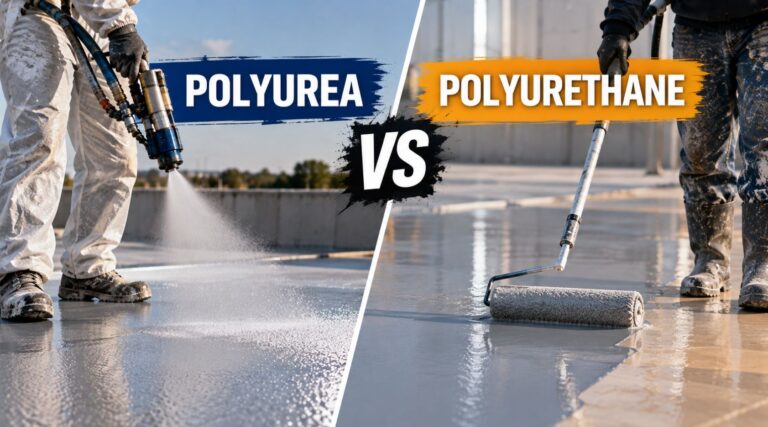
Polyurea as a Modern Coating Solution
Polyurea didn’t emerge overnight. It came out of decades of research into rapid-cure polymers and high-strength barrier systems. Where earlier materials had limitations, polyurea offered new possibilities — fast application, high elongation, and chemical resistance. As early formulations entered the field, researchers continued to refine the material’s performance envelope.
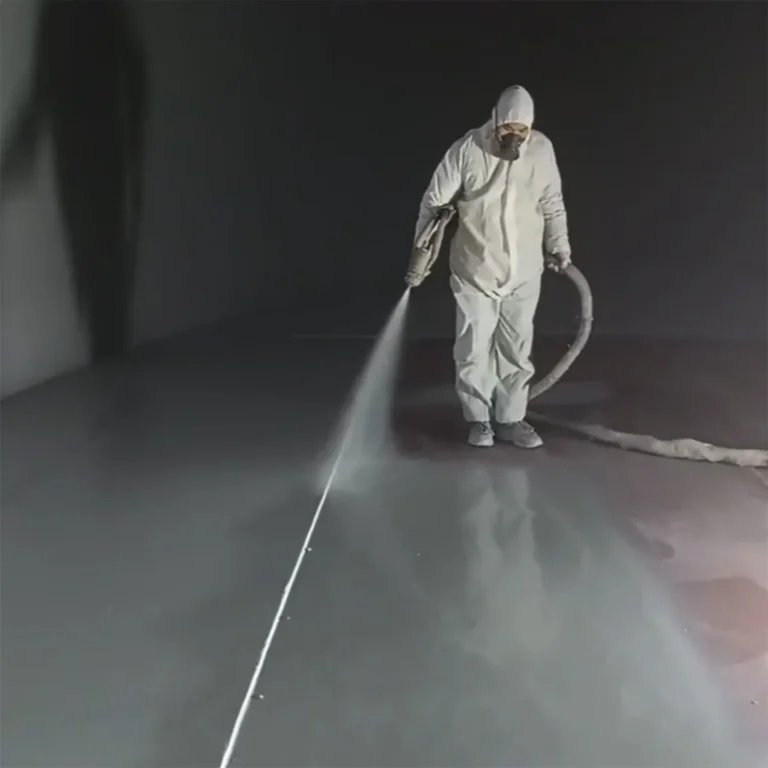
Through internal testing and applicator feedback, chemists adjusted reactivity windows, adapted mix ratios, and refined spray techniques to meet the specific demands of different surfaces. These included porous concrete, aging steel, flexible substrates, and geotextile fabrics. In each case, polyurea’s base chemistry remained consistent, but the additives, primers, and application methods evolved. Each project was treated as a variable set rather than a fixed equation.
The result was not just better product consistency — it was a deeper understanding of how polyurea works at the molecular level: how chain formation, heat generation, and substrate interaction affect long-term performance. For engineers and contractors who rely on data, this knowledge adds crucial clarity to the decision-making process.
Polymer Adaptation for Complex Environments
The environments that coatings face continue to grow more complex. Tanks store harsher chemicals. Infrastructure endures wider temperature swings. Surfaces flex, corrode, or shift under load. Adapting polyurea to these demands starts with laboratory work but culminates in field application. Each new challenge gives rise to formulations that consider viscosity, film thickness, cure profile, and barrier resistance.
This responsiveness is especially important in regions with extreme climates, where seasonal cycles impose unique stressors on structures. Coating systems applied in cold weather must cure properly, bond to damp surfaces, and resist freeze-thaw damage that breaks down conventional materials. Advances in polyurea chemistry reflect a broader scientific understanding that material resilience must match environmental complexity. Modern polymer science has risen to meet this challenge, producing systems that hold up not just in controlled tests, but in long-term, real-world exposure.
Supporting the Polymer Knowledge Base
In an industry where proprietary formulas often dominate discussion, open access to technical information becomes especially valuable. The broader polymer coating community has increasingly embraced knowledge-sharing — through academic journals, trade publications, and industry conferences — where engineers, chemists, and applicators exchange data and insight. These resources help move the field away from trial-and-error approaches toward evidence-based practice.
Shared technical content helps translate chemical concepts into practical knowledge. Practitioners learn how polyurea’s molecular structure influences tensile strength, how surface preparation affects bond longevity, and how cure times vary under different humidity conditions. These are technical truths that allow materials scientists and installers to communicate effectively and make better decisions in the field.
Polymers as a Strategic Tool in Industrial Protection
The coatings industry increasingly intersects with strategic infrastructure. Bridges, containment tanks, stormwater systems, and critical facilities all rely on polymers that protect structural integrity without adding unnecessary weight or cost. Advanced polyurea coatings act as both physical barriers and engineered systems — preventing substrate movement from propagating into fracture, bridging micro-cracks, guarding against chemical intrusion, and preserving the design life of assets that must operate without failure.
For project owners and engineers evaluating polymer coating systems, the decision should not rest on price-point alone. Long-term performance — defined not by marketing claims but by verified field data — represents the true measure of value. This thinking has driven meaningful progress in how polymer sourcing decisions are made across construction, military, and infrastructure sectors.
Looking Ahead: The Future of Engineered Polymers
As climate pressures, regulatory requirements, and performance expectations evolve, polymer science must remain adaptable. New substrates enter the market. Environmental regulations tighten limits on VOCs and solvent use. Project timelines compress. The most resilient polymer systems are those built not on market trends, but on a deep foundation of chemical understanding.
For developers, contractors, and engineers working in advanced material systems, the field of high-performance polymer coatings offers remarkable potential. It provides insight into how polymers behave, how complex systems integrate, and how long-term protection functions under real-world conditions. That knowledge — though less visible than the coating itself — carries weight across every surface it protects.
Was this helpful?
Thanks, that helps us decide what to write next.

Written by
Dr. Marcellus Vance holds a Ph.D. in Polymer Chemistry from the University of Michigan and has spent over fifteen years researching high-performance elastomers, polyurea systems, and advanced coating technologies. His work has focused on the molecular engineering of polymer networks for industrial, military, and infrastructure applications. Dr. Vance has contributed research to peer-reviewed journals in materials science and regularly writes about emerging developments in polymer chemistry, protective coatings, and synthetic materials.