Polyurea Floor Coating vs Epoxy Garage Floor: The 2025 Showdown
Polyurea floor coating vs epoxy garage floor: which wins in 2025? We compare hot tire resistance, cure time, cost, and 10-year durability so you can make the right choice for your garage or commercial floor project.

Key takeaways
- Before comparing performance, it helps to understand what distinguishes these two coating chemistries — because the chemistry explains almost every performance difference you will encounter in the field.
- This is the failure mode that consistently surprises homeowners who invested in a professional epoxy garage floor: hot tire pickup.
- This is the category where polyurea most dramatically outperforms epoxy from a homeowner experience standpoint.
- For a standard two-car garage floor of approximately 480 square feet, here is what the market looks like in 2025 for professionally installed systems:
On this page

Polyurea Floor Coating vs Epoxy Garage Floor: The 2025 Showdown
Garage floor coatings are a booming market. Which system actually holds up to daily use, hot tire pickup, and chemical spills?
The question comes up constantly on contractor forums, homeowner subreddits, and at home improvement stores: what is the difference between polyurea floor coating and epoxy for a garage floor, and does the price difference actually matter?
The short answer is yes — but not always for the reasons you might expect. This comparison cuts through the marketing language to give you a straight read on how each system performs in the real conditions of a residential or commercial garage: hot tires, road salt, dropped tools, oil spills, and years of thermal cycling.
What Each System Actually Is
Before comparing performance, it helps to understand what distinguishes these two coating chemistries — because the chemistry explains almost every performance difference you will encounter in the field.
Epoxy Floor Coating Chemistry
Epoxy coatings are formed from the reaction between an epoxide resin and a polyamine hardener. The resulting film is rigid and thermoset — once cured, it does not remelt from heat. Standard 100% solids epoxy garage coatings achieve tensile strengths in the 7,000 to 10,000 psi range, which sounds impressive until you realize that brittleness — not tensile strength — is the primary failure mechanism in garage floor applications.
Epoxy elongation values typically fall in the 2–5% range. The coating has very little ability to stretch when the concrete substrate moves under it. And garage concrete moves — every time the temperature cycles from a cold night to a warm afternoon, the slab expands and contracts. Over time, those micro-movements crack the epoxy film at stress concentrations: joints, edges, and surface voids.
Polyurea Floor Coating Chemistry
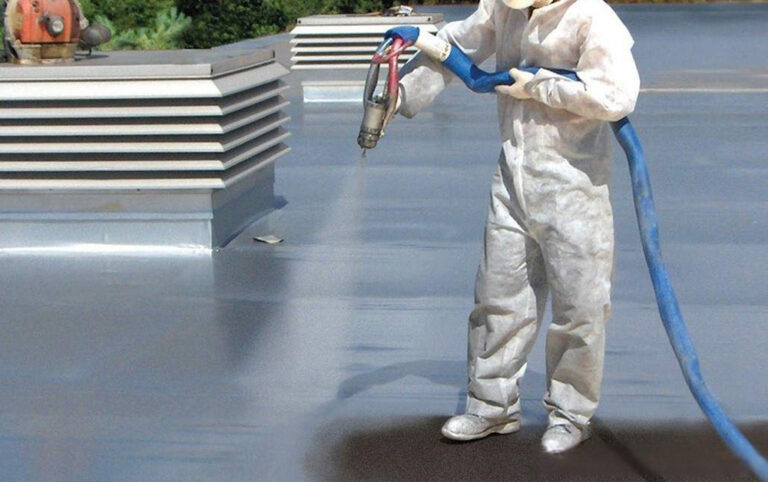
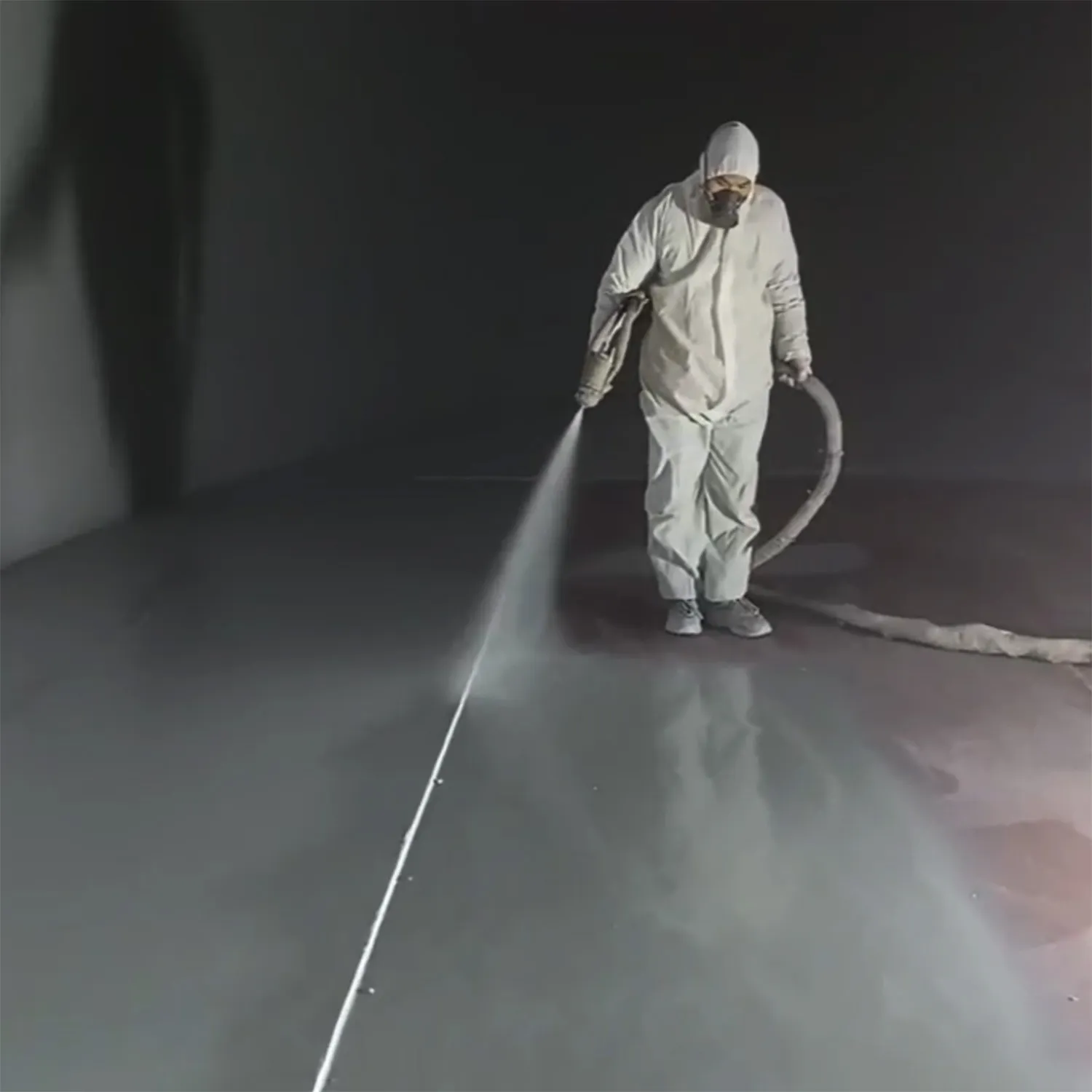
Polyurea floor coatings are formed from the reaction between an isocyanate component and an amine-functional component. The result is a highly flexible, fast-curing elastomer. Elongation values for garage-grade polyurea floor coatings typically range from 200% to 400%, meaning the coating can stretch to two to four times its original length before it tears. That flexibility allows it to move with the concrete rather than fighting it, and it is the fundamental reason polyurea garage floor coatings do not develop the star cracks and delamination patterns that characterize aging epoxy floors.
The Hot Tire Test: Where Epoxy Falls Short
This is the failure mode that consistently surprises homeowners who invested in a professional epoxy garage floor: hot tire pickup. When you pull your car into the garage on a summer afternoon, your tires are running at temperatures between 120°F and 150°F. If your epoxy floor was applied over a concrete slab that was warmer than the specification allows, or if the coating’s glass transition temperature is too low, the plasticizers in the tire compound can chemically bond to the uncured or softened epoxy surface.
When you move the car, the tire tears away chunks of the epoxy floor. This is one of the most common warranty callbacks in the residential garage floor coating industry — and it almost never happens with polyurea. Quality polyurea floor coatings maintain their mechanical properties well above 200°F. Tire temperatures simply do not cause issues.
Installation Time and Return to Service
This is the category where polyurea most dramatically outperforms epoxy from a homeowner experience standpoint.
| Factor | 100% Solids Epoxy | Polyurea Floor Coating |
|---|---|---|
| Foot Traffic Return | 24–72 hours | 30 minutes to 2 hours |
| Full Vehicle Traffic | 72 hours minimum, often 5–7 days | 24 hours |
| Application Temp Range | 50°F–85°F substrate (strict) | 0°F–120°F substrate (very tolerant) |
| Moisture Sensitivity | High — fails on moist concrete | Low — applies over moist substrates |
| Hot Tire Resistance | Poor to moderate | Excellent |
| Chemical Resistance | Good | Excellent |
Appearance and Decorative Options
Both systems support a wide range of decorative options. Vinyl chip or flake systems — where colored polymer flakes are broadcast into the wet basecoat — work over either chemistry. Metallic finishes are available in both. The primary aesthetic concern specific to chemistry is UV yellowing: aromatic epoxies and aromatic polyurea will both yellow over time when exposed to UV light. For garage floors exposed to direct sunlight, specifying an aliphatic topcoat is important regardless of which base chemistry you choose.
Polyurea Floor Coating vs Epoxy Garage Floor: Cost Comparison 2025
For a standard two-car garage floor of approximately 480 square feet, here is what the market looks like in 2025 for professionally installed systems:
| System | Installed Cost (480 sq ft) | Expected Service Life |
|---|---|---|
| DIY Water-Based Epoxy Kit | $200 – $600 | 2–5 years |
| Professional 100% Solids Epoxy | $1,800 – $3,500 | 5–10 years |
| Professional Polyurea-Polyaspartic System | $2,500 – $5,000 | 10–20+ years |
| Full Spray Polyurea System | $3,500 – $6,500 | 15–25+ years |
The professional polyurea-polyaspartic system — which most residential garage floor contractors now offer as their premium product — uses a polyurea or polyaspartic basecoat and a polyaspartic topcoat. This system has largely displaced traditional two-coat epoxy in the premium residential garage floor market over the past five years.
What the Professional Industry Has Decided
The shift in the residential garage floor coating industry over the past several years tells the real story. The major national garage floor coating franchises — businesses doing hundreds of installs per month at scale — have almost universally moved away from traditional two-coat epoxy toward polyurea and polyaspartic systems. The reasons are operational as much as performance-driven: faster cure enables same-day installations, which means scheduling more jobs per week per crew.
That operational efficiency, combined with better long-term performance and fewer warranty callbacks, has made polyurea-based garage floor systems the dominant professional choice even at a 30–50% price premium over comparable epoxy systems.
When Epoxy Still Makes Sense
Epoxy is not a bad product — it is a product with specific performance limitations you should understand before committing to it. Epoxy makes the most sense for garage floors when: the budget is genuinely constrained and a 5–7 year service life before recoating is acceptable; when the climate is mild and thermal cycling is minimal; when vehicle use is light and hot tire transfer is not a concern; or when the project is a rental property where long-term durability is less critical than initial cost.
For primary residences in climates with significant temperature swings, for homeowners who want to do this once and not revisit it for 15 years, and for any application with heavy vehicle use or chemical exposure — polyurea wins the comparison clearly.
The Verdict: Polyurea Floor Coating vs Epoxy Garage Floor
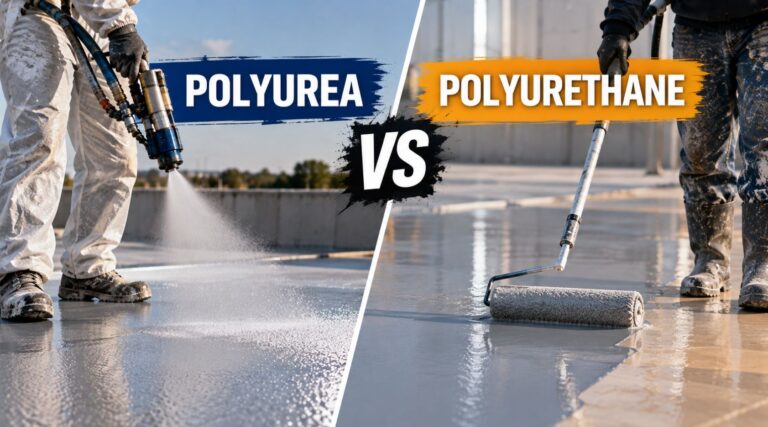
In a direct head-to-head between polyurea floor coating and epoxy garage floor systems, polyurea wins on almost every performance metric that matters in daily use: flexibility, hot tire resistance, cure speed, application temperature tolerance, and long-term durability. Epoxy wins on initial installed cost — often by a meaningful margin — but that advantage narrows and eventually reverses when you account for recoat cycles over a 10 to 15-year ownership horizon.
The professional garage floor coating industry’s shift toward polyurea-based systems is not driven by marketing — it is driven by fewer warranty callbacks, better customer satisfaction, and operational efficiency that makes the higher material cost worthwhile. For most homeowners making this decision in 2025, the performance data points clearly toward polyurea.
If you are evaluating floor coating systems for a garage, commercial bay, or industrial floor application, Radiant Polymers works with coating contractors across the spectrum from residential to heavy industrial. Contact our technical team to discuss the right polymer system for your specific application and climate.
Pricing data in this article represents 2025 market averages based on industry surveys. Actual costs vary by region, contractor, and project conditions. Always request multiple quotes for garage floor coating projects.
Was this helpful?
Thanks, that helps us decide what to write next.

Written by
Radiant Polymers covers polymer chemistry, protective coatings and the practical side of applying them.